Wednesday, November 26, 2008

Sundials and Hourglasses

The two exhibits I chose to show you are two unconventional and maybe even primative clocks who are no longer popoular; the Sundial and the Hourglass, more known as the Sand Clocks.


Exhibit No. 1: The Hourglass
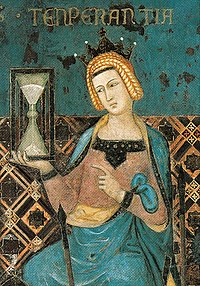
The Hourglass is created by two glass that are placed one above the other with a very small hole between them. One of the glass is filled with sand, that flows through the other glass. In most Hourglasses, we know an hour have past when the upper glass is empty and the lower glass is full with the sand.


The Hourglass was said to be invented in the middle of the 3rd century in Alexandria. It was the first measure of time in history, and people actually carried it with them, as we carry analog or digital hand watch today. Nowdays, there are only few pratcial uses to the Hourglasss, and except board games and egg cooking, it isn't very popoular.


In the picture: The fresco "Allegory of Good Government" from the 14th cetnruy, which shows how old this device is.


Exhibit No. 2: The Sundial

The Sundial is maybe the "father" of the known analog clock. It measures time by the position of the Sun. In the middle of the sundial, there is a very thin object, mostly shaped like a triangle or a stick, and its shadow can tell more or less what's the hour, according to the position of the sun in that moment.


The Sundial is said to be invented in ancient Egypt, nearly 6000 years ago. With time, it became more specific and efficient, but even now, you can't tell what is the exact hour from the Sundial. There is no use for Sundials now for many reasons, the major of them is that it can't really tell the specific hour and it's not moveable, also.


In the picture: A horizontal sundial in Taganrog, from the 19th century.


These are the two exhibits I chose to show you. I hope you've learned a bit more about ways of measuring time.

Very good work, Omer. I really liked the way you chose to present your exhibits. Please correct your mistakes and make it perfect.
Daphna

Thursday, November 6, 2008

Barcelona

I want to tell you about a special Spanish city I visited last holidays with my parents - Barcelona, and about its special places like the Sagarda Familia, La Rambla and the Gaudí buildings.

Barcelona is located in northern Spain in a district called Catalunya, so except Spanish, most of the Barcelona's citizens also speak a language called Catalan. The city was built by Hercules and was rebuilt by Carthaginian Hamilcar Barca, the father of Hannibal. Barcelona offers many shops and wide, crowded avenues, but also historical buildings and astonishing churches. The Sagarda Familia is no doubt the most impressive of them. Though not beautiful, this church is amazingly huge and the whole buiding is covered with thousands of details, sculptures and artistic symbols.

Barcelona also offers, like I mentioned, wide avenues, full of shops and cafes. The most signicifant one is La Rambla. Besides places to shop, it also offers still sculptures, entertainers and painters. It's a beautiful place. Barcelona also has many buildings of the architect Antoni Gaudí, like Park Güell, the Casa Milà and the Casa Batlló, which are full of many colors and works of art. I also found the citizens of Barcelona very nice and kind.

To conclude, I had a perfect time in Barcelona and I would like to visit there again, because I don't feel I saw everything interesting in this very large city. I also think that if you want the perfect vacation; a mixture between "Art Nouveau" buildings, Gothic churches, very big parks and wide shopping avenues, you should visit Barcelona.
Excellent work, Omer!
Now, let me give you a piece of advise. The body of your essay was too "crowded" and had to be divided. I did that for you. Next time you write an essay, think of the structure and divide your writing into as many paragraphs as needed.
Daphna.